
Jim Dine
Jim Dine (born 1935 in Cincinnati, Ohio) moved to New York in 1958, where he became known for his early Happenings and assemblages. A pioneer of the New York avant-garde and closely associated with early Pop Art, Dine is known for his paintings, assemblages, sculptures and extensive graphic work. His art draws on everyday objects and personal symbols such as tools, garments, hearts and bathrobes, which he reinterprets through expressive colours, gestural forms and recurring imagery. His practice is difficult to assign to a single artistic movement, combining elements of Pop Art, Neo-Dada and Expressionism across a wide range of media.
Jim Dine Editions
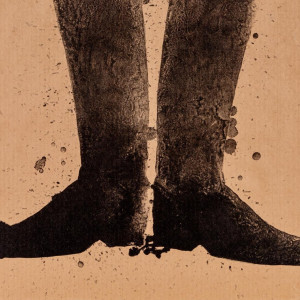
Silhouette Black Boots on Brown Paper
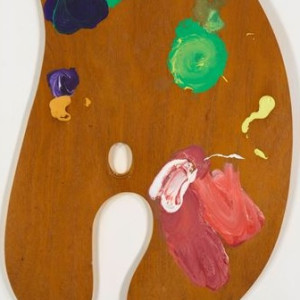
Palette IV, from Four Palettes
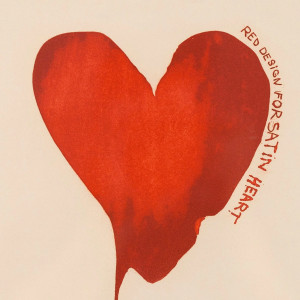
Red Design for Satin Heart
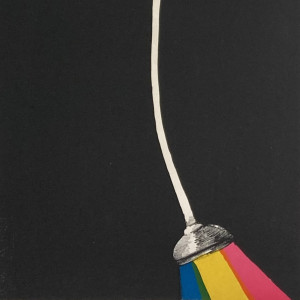
Untitled (Shower/Lamp)
Jim Dine
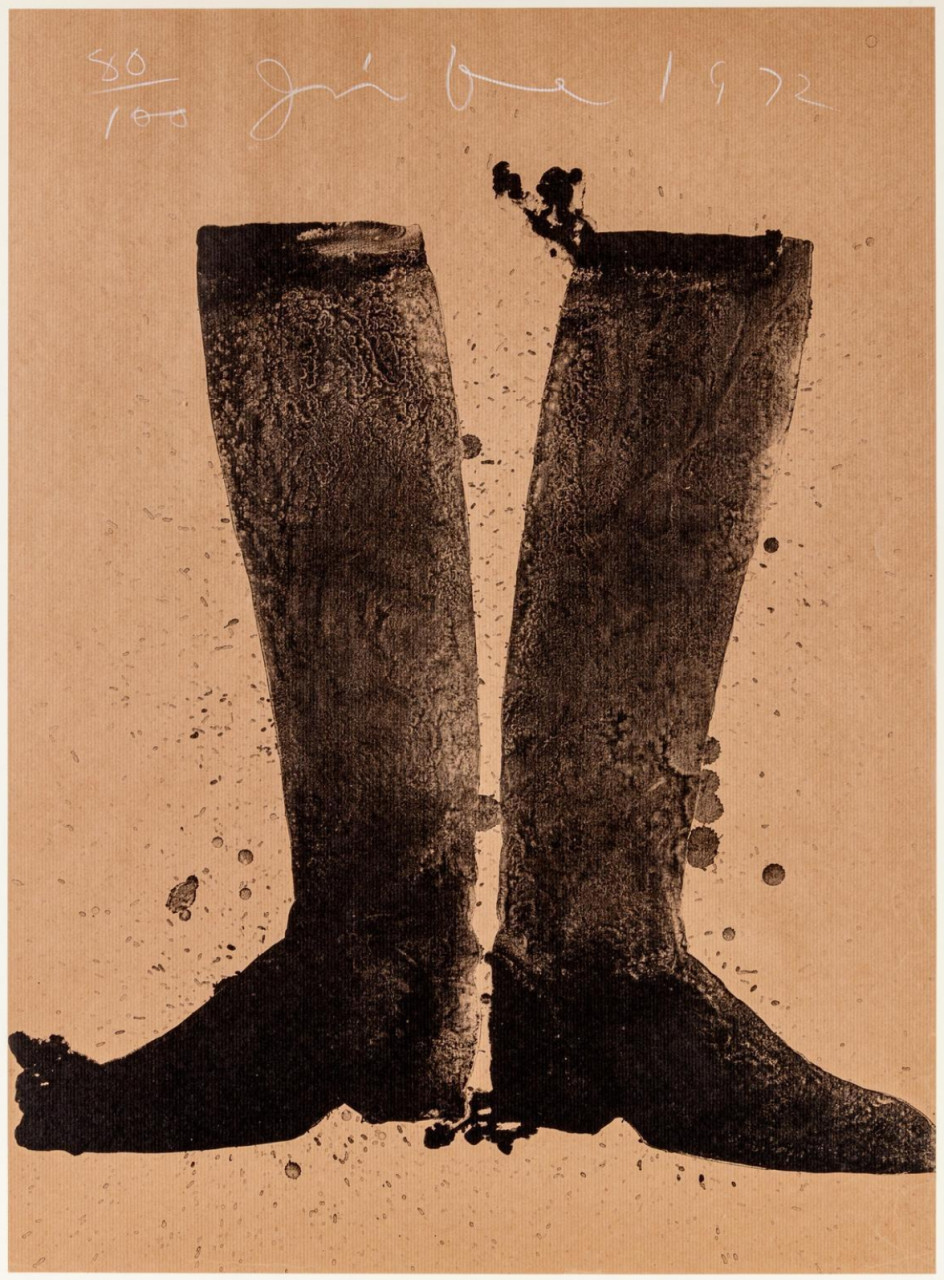
Silhouette Black Boots on Brown Paper
1972
Lithograph print on brown wrapping paper, 75.5 x 56 cm. Edition of 100, signed and numbered.
Jim Dine’s edition Silhouette Black Boots on Brown Paper (1972) depicts a pair of oversized black boots against a plain brown ground. The dark silhouettes appear both solid and strangely empty, suggesting the presence of a wearer while emphasizing their absence. The rough surface of the lithograph and the surrounding splattered marks heighten the sense of physicality and immediacy.
The work exemplifies Dine’s fascination with ordinary objects as carriers of personal and emotional associations. By isolating the boots from their everyday context, he transforms a familiar object into an almost human presence. The tension between the familiar and the enigmatic, presence and absence, is characteristic of Dine’s treatment of everyday forms.
EUR 3,000
Jim Dine
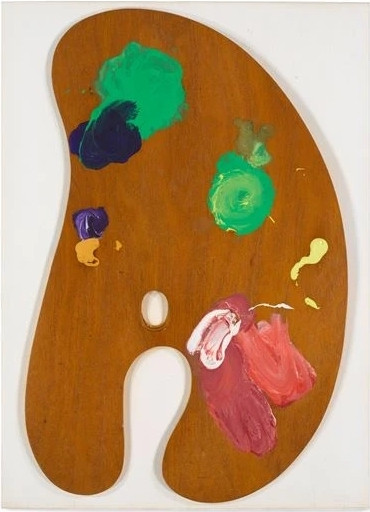
Palette IV, from Four Palettes
1969
Painted wood multiple mounted to board, framed in Plexiglas, 71.1 x 50.8 cm. Edition of 75, signed and numbered.
Jim Dine
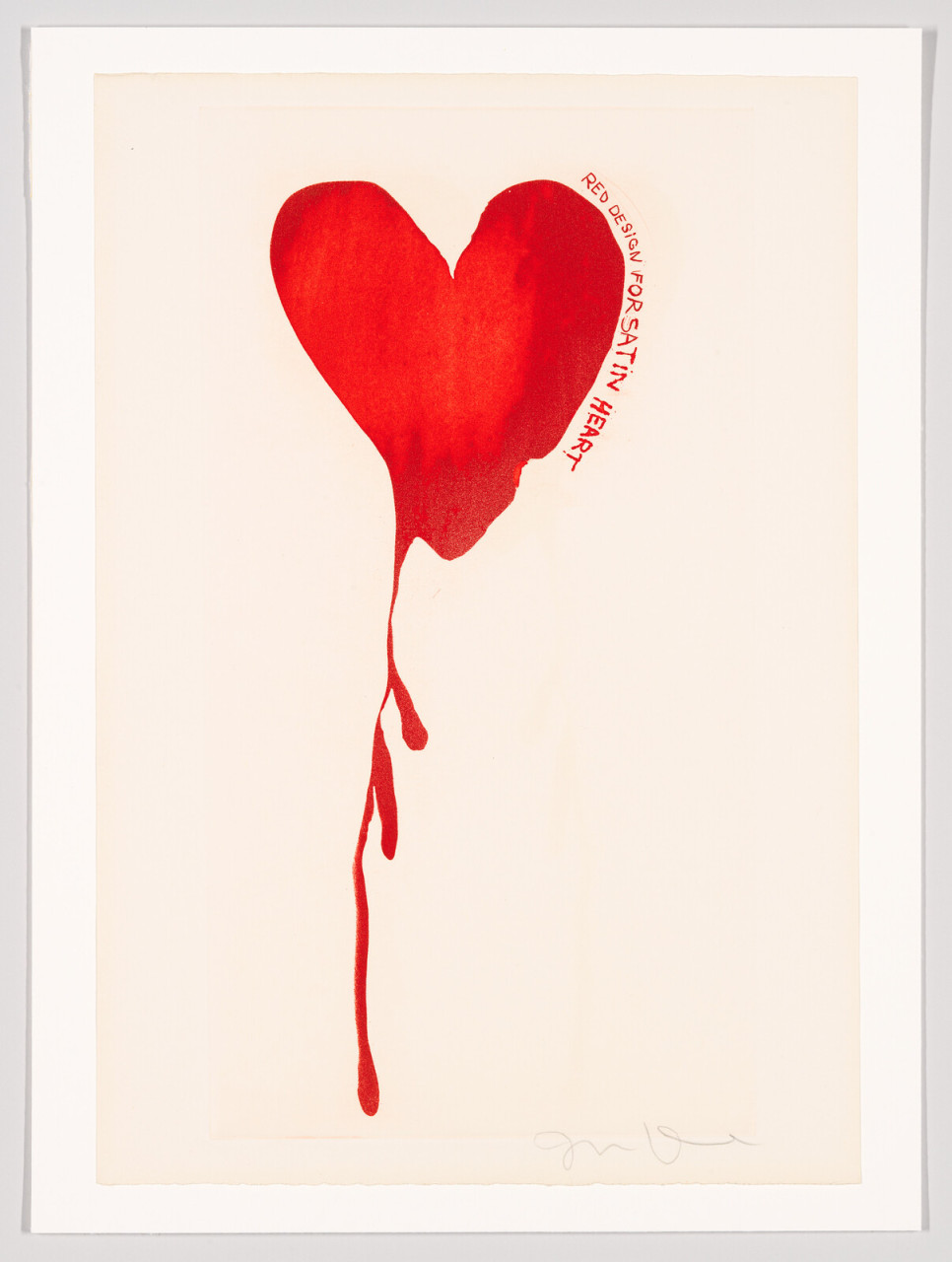
Red Design for Satin Heart
1968
Aquatint and etching, 45 × 31 cm. Edition of 100, signed and numbered.
This edition was created as part of Jim Dine's illustrations for his planned stage adaptation of Oscar Wilde’s The Picture of Dorian Gray. The work combines Dine’s fascination with familiar, everyday forms with bold colour and expressive, painterly marks, drawing on the influences of Dada assemblage, Abstract Expressionism and collage.
The heart is one of Dine’s most recognizable motifs, and Red Design for Satin Heart is among the earliest appearances of the heart in his work. Although its connection to Wilde’s story remains open to interpretation, the motif became a defining element of Dine’s visual language. Dine’s The Picture of Dorian Gray series is represented in the collections of The Metropolitan Museum of Art and the Whitney Museum of American Art, both in New York.
EUR 2,000
Jim Dine
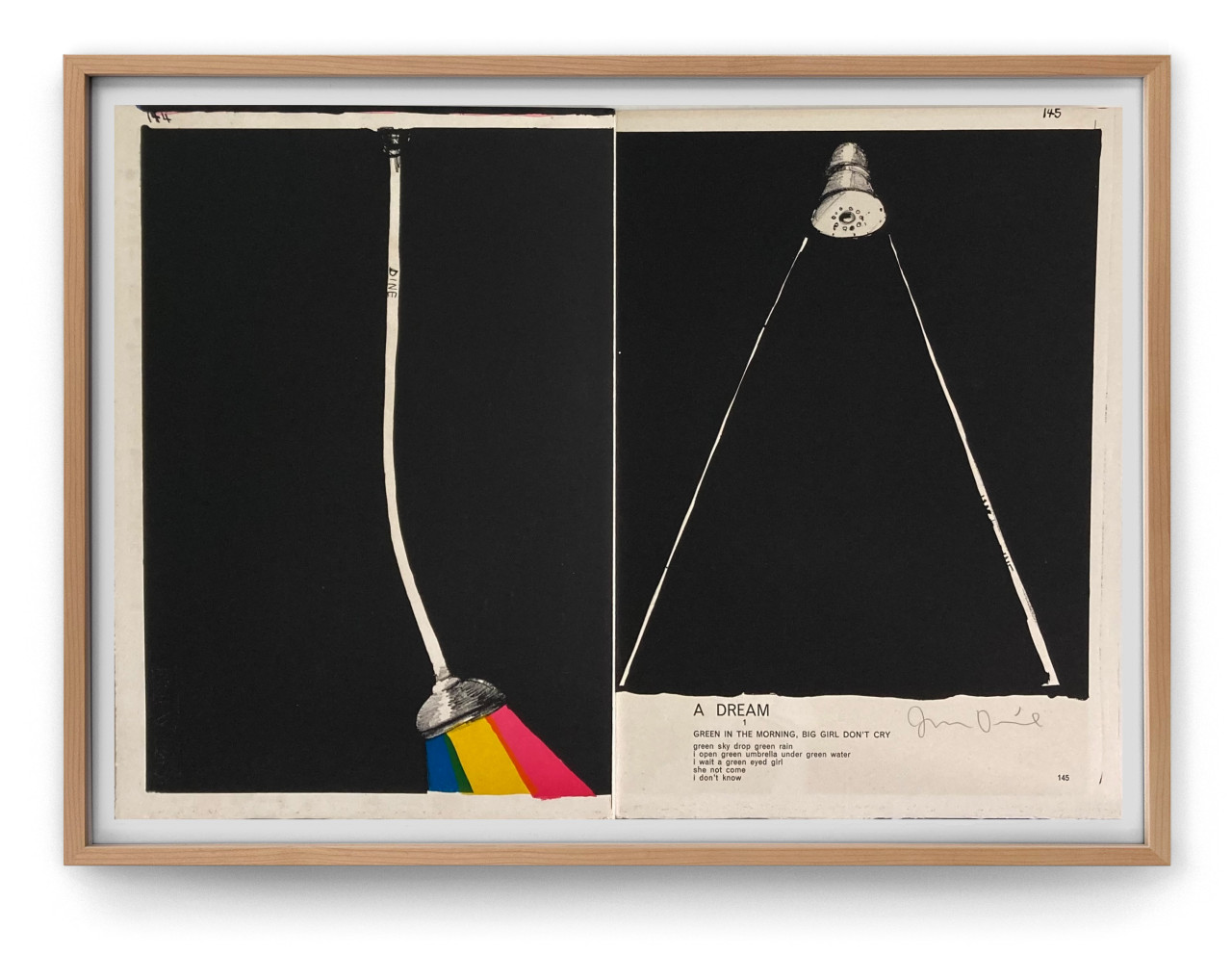
Untitled (Shower/Lamp)
1964
Color lithograph on BFK Rives rag paper, in two parts (as published), 41 x 58 cm overall. From the signed deluxe edition of 100 (there was also an unsigned edition of 2,000).
Jim Dine’s edition Untitled (1964), created for the landmark print portfolio 1 Cent Life, spans a double-page spread pairing a brightly coloured broom with a shower head against stark black fields. The two familiar domestic objects are reduced to simple, graphic forms, with the rainbow-coloured broom providing a vivid contrast to the predominantly monochrome composition. On the facing page, the shower head casts two long streams of water downward, while Walasse Ting’s poem A Dream appears below. The juxtaposition of ordinary household objects, dramatic imagery and Ting’s poetic text gives the work an enigmatic, dreamlike quality, characteristic of Dine’s transformation of everyday things into evocative subjects.
EUR 3,500

