Special Offers
In this section we are offering a rotating selection of fine art editions at usually 60% of their retail value, which will be periodically updated. In most cases only one copy of each edition is available, and will be marked when sold. All works are signed and numbered, and are in good condition unless otherwise indicated. For once, the listed Euro prices include VAT and shipping costs (Federal Express, UPS, TNT) within Europe. The listed US$ prices include shipping to the United States and Canada. Shipping costs for other overseas destinations on request. However the buyer may be responsible for any applicable duties/taxes.
The Smoking Man

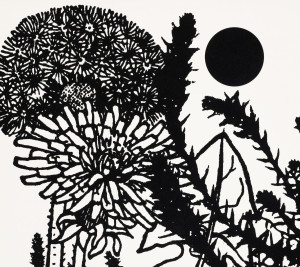
from: Black Dahlias
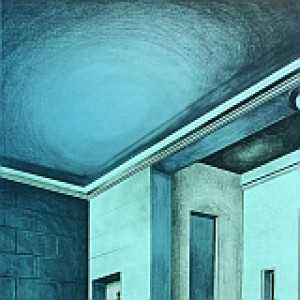
from: Nächte
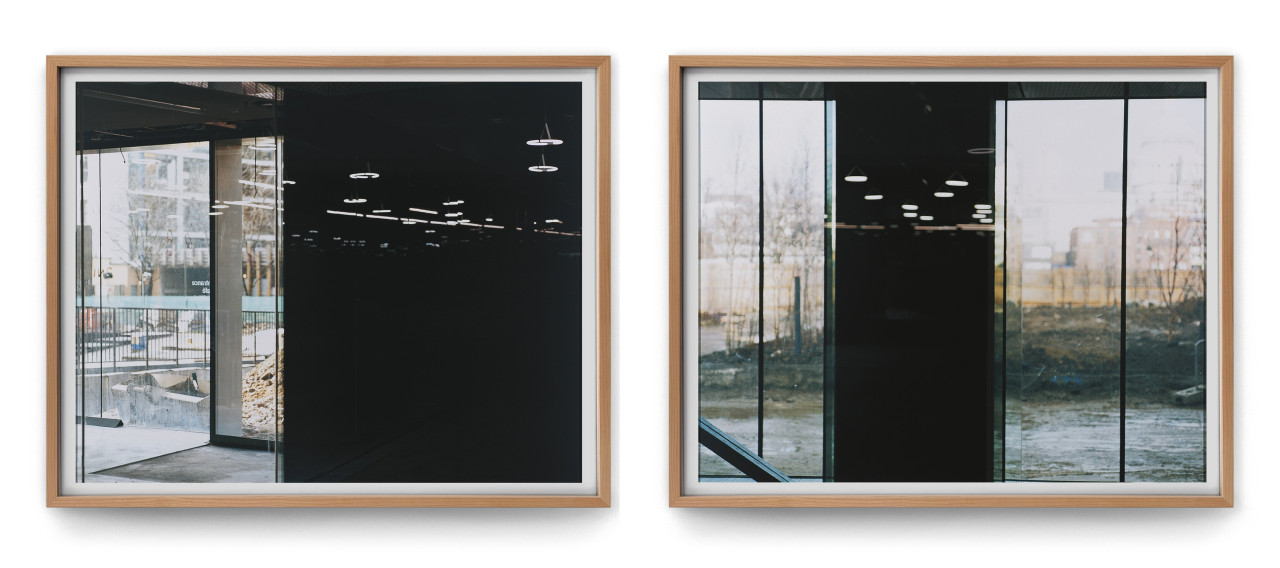
Uta Barth
Untitled (02.1)
2002
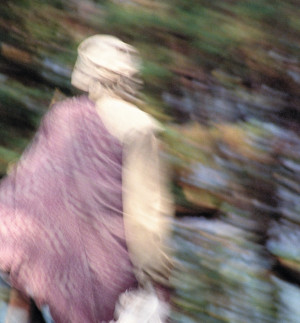
From Double Exposure
Two color photographs, mounted on Sintra, 48 x 61 x 0.4 cm (19 x 24 in) each. Edition of 45 +10 A.P., signed on verso of left image, numbered on verso of right.
The two photos of this edition were taken at Tate Modern, London, while the museum was under construction.
special price set € 1,960 / $2,000 shipping costs included
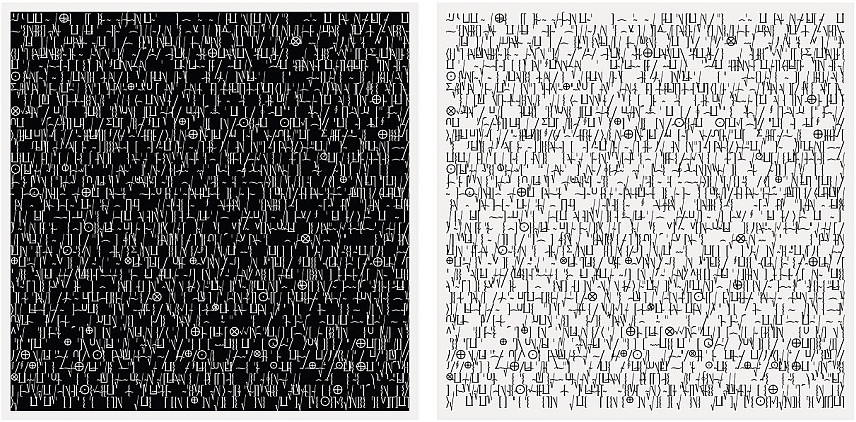
Lothar Baumgarten
Frage/Antwort
2009
Published for Kunsthaus Bregenz
Set of two digital pigment prints (Ditone), 68 x 68 cm (26¾ x 26¾ in) each, edition of 30, each signed and numbered.
This edition illustrates negatively and positively a “question” and “answer” from the interview that Christian Rattemeyer conducted with Lothar Baumgarten for the textbook of his exhibition at Kunsthaus Bregenz, transformed into a mathematical system of signs. The phonetic structure of the conversation takes on the character of a musical score through its translation into an abstract formal figure.
sold
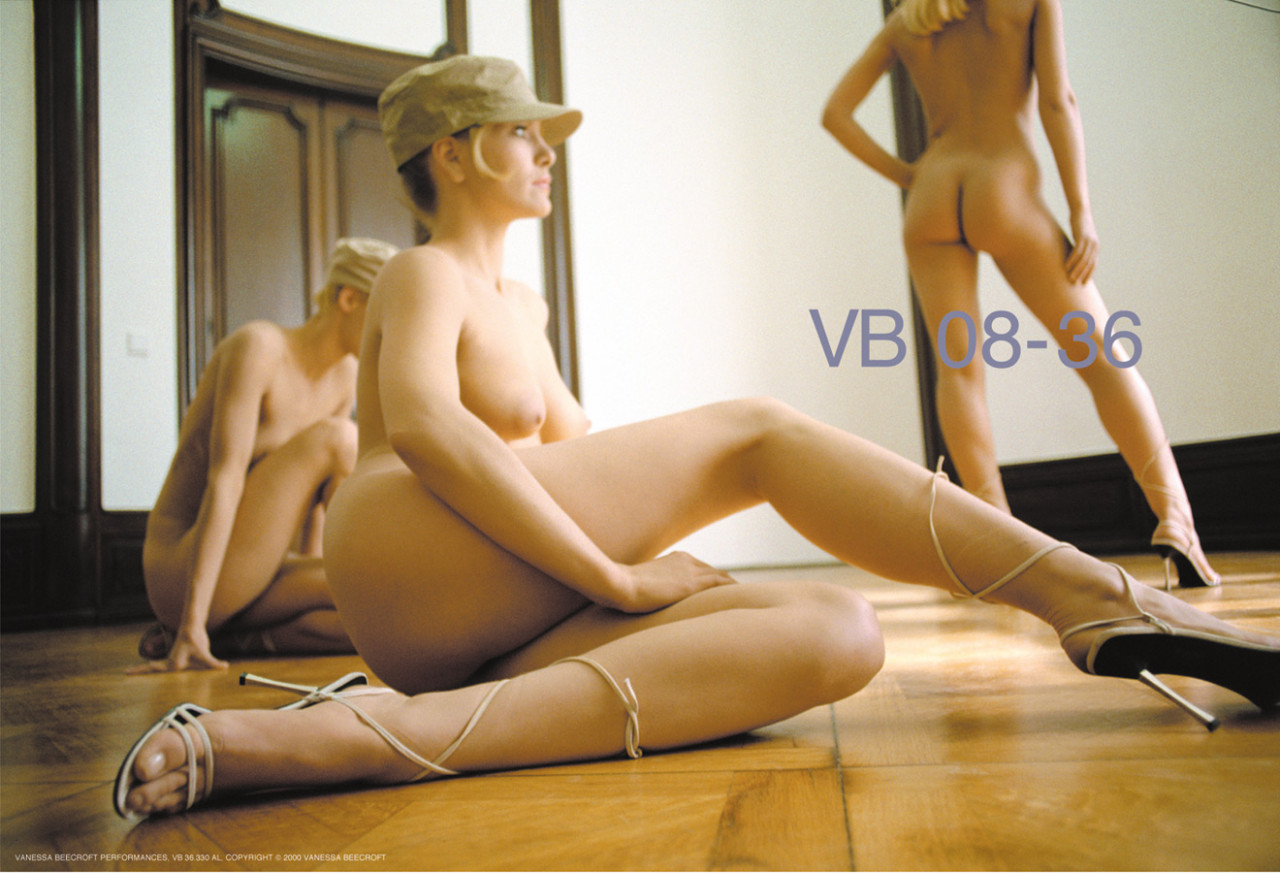
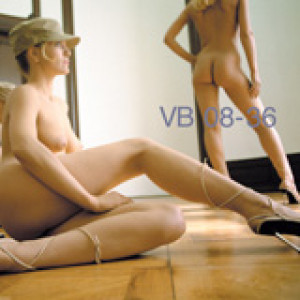
Vanessa Beecroft
VB 08-36
2001
Lithograph with silver embossing, 92.3 x 136 cm (36½ x 53½ in). Edition of 300, with signed certificate.
This large size print originated from a 1998 performance at the Galerie für Zeitgenössische Kunst in Leipzig, Germany.
special price € 1,600 / $1,650 shipping costs included
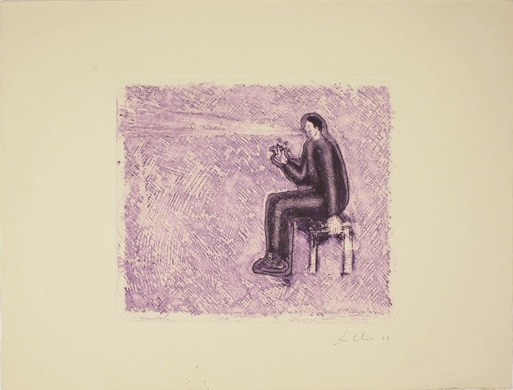
Sandro Chia
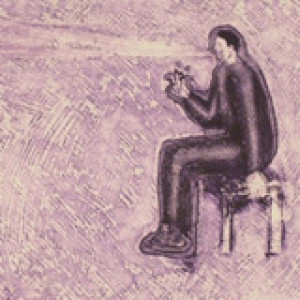
The Smoking Man
1980
Etching on rag paper, 45 x 59 cm (17¾ x 23¼ in), unique proof, signed.
Condition: some stains at the bottom.
€ 1,200 € 720 / 800 shipping costs included
Hanne Darboven
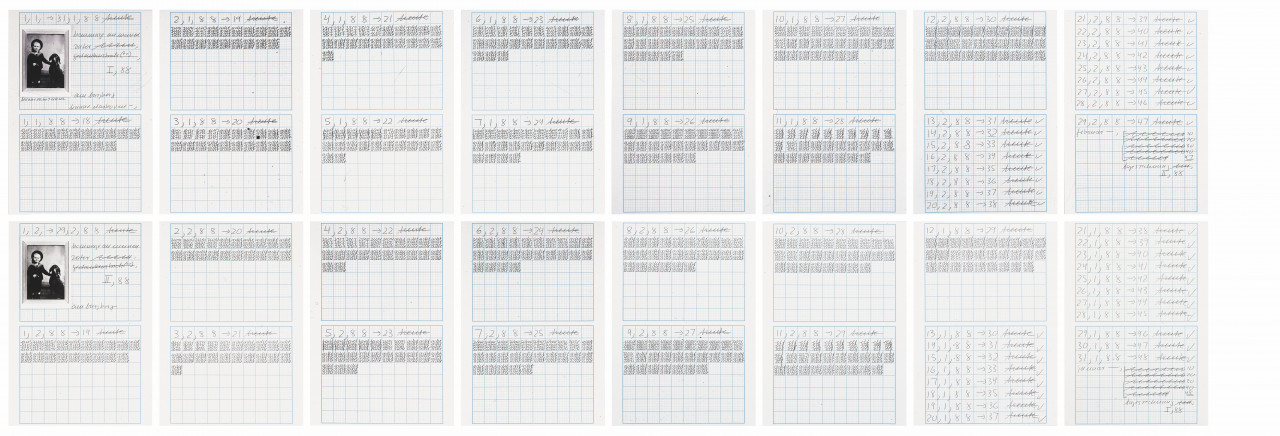
Hommage an meinen Vater
1989
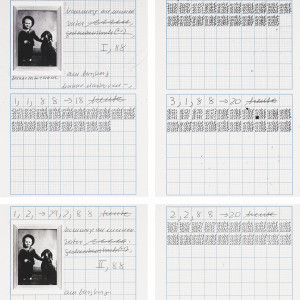
96 offset lithographs on cardboard; 12 sets of 8 sheets each, out of which on first one an identical b/w photograph is mounted, in cloth portfolio box 43.5 x 31 x 4.5 cm (17 x 12.25 x 1.75 in), Edition of 50, signed „h.d.“ and numbered on label on box.
With her edition In Hommage an meinen Vater (In Homage to My Father), Hanne Darboven honors her father in a striking composition, where she integrates personal photographs into a strictly gridded arrangement. This structure is dominated by her characteristic system of mathematical calculations and principles. The autobiographical work provides deep insight into Darboven's precise and meticulous artistic practice, for which she is internationally renowned. Her close relationship with her family is reflected not only in this tribute but also in her way of life: in the late 1960s, she permanently returned to her parental home, which also became the center of her artistic production.
Portfolio € 2,500 € 1,500 / $1,600 shipping costs included
Thomas Demand
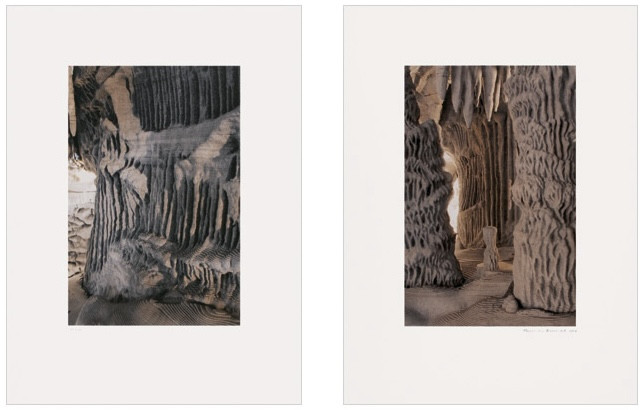
Grotesques 32 and 53
2006
2 photogravures on rag paper, 73 x 57 cm (28¾ x 22½ in). Edition of 100, one image signed, the other numbered.
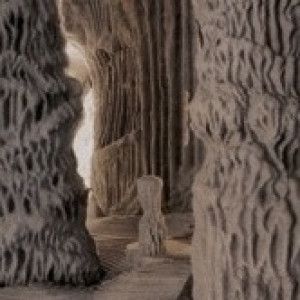
This edition is based on Thomas Demand’s 2006 work Grotto. Using a postcard as a starting point, the artist recreated a grotto located on the island Mallorca, Spain. Employing 30 tons of grey cardboard, shaped with the help of a computer and laid out to form a stratification with 900,000 sections, Demand carefully recreated the rock chamber, stalactites and stalagmites displayed on the postcard, which he then photographed.
sold
Ellen Gallagher
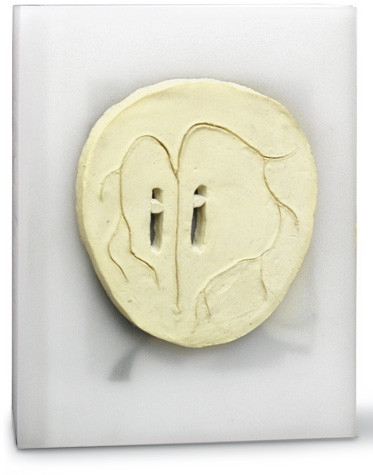
eXelento
2005
Exhibition catalogue, with cast and molded rubberized plastic cover, 24 x 16.5 x 5 cm (9½ x 6½ x 2 in). Edition of 100 (each of 9 different images), signed and numbered.
€ 900 € 540 / $600 shipping costs included
Liam Gillick
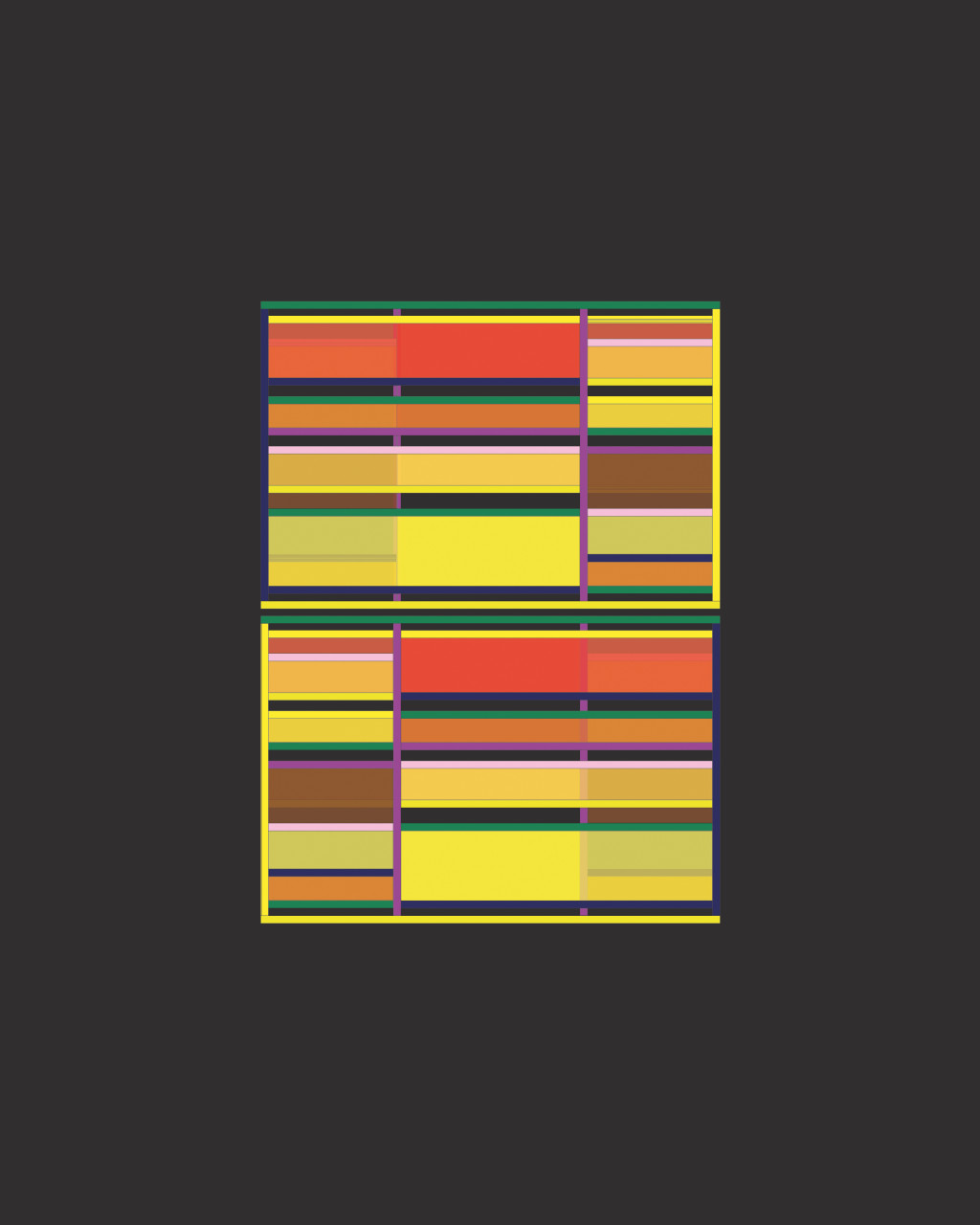
from: Six Discussion Screens
2009
Digital pigment print (Ditone), from a portfolio of 6 prints,100 x 80 cm (39½ x 31½ in). Edition of 40, signed and numbered on label on verso.
€ 1,800 €1,170 / $1,300 shipping costs included
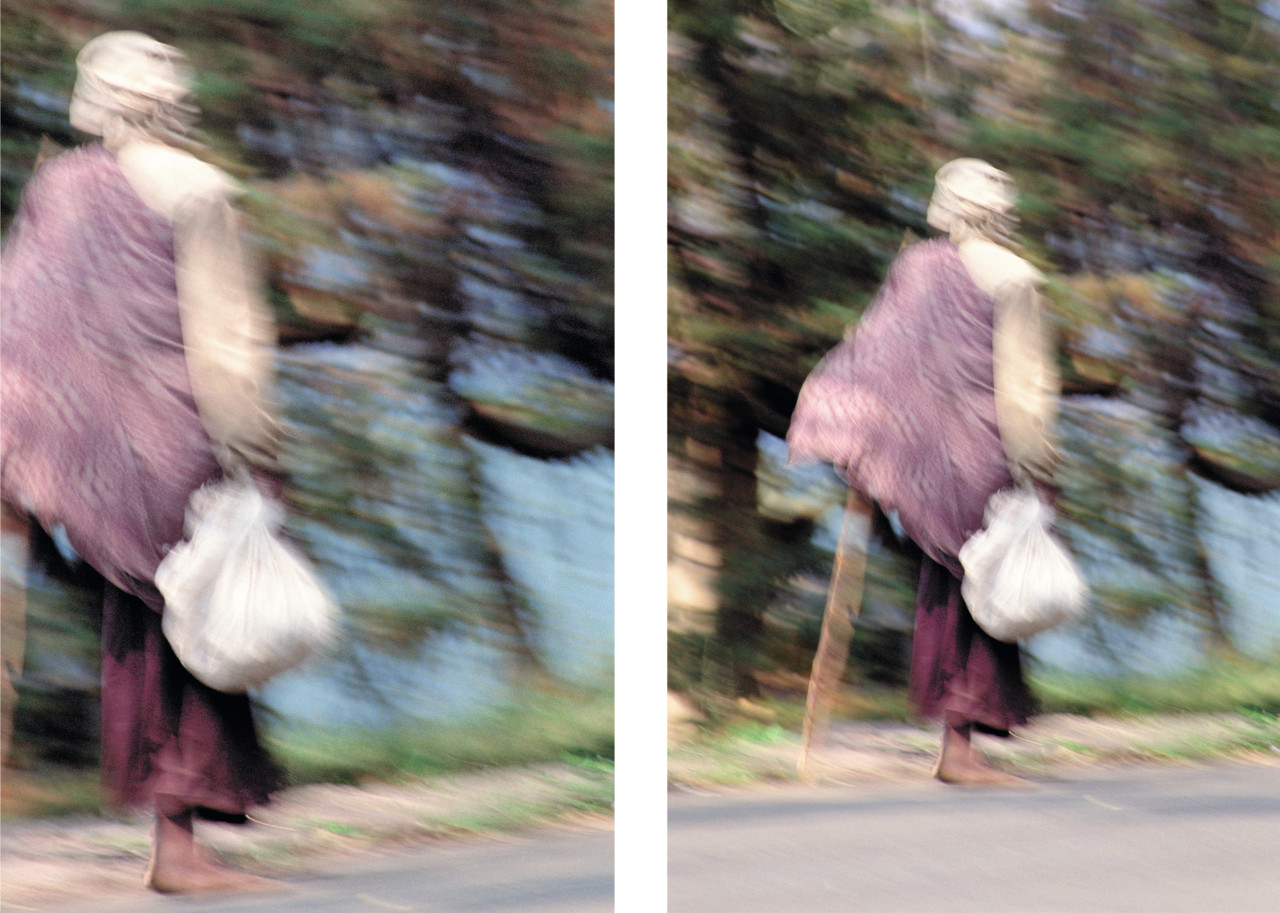
Alfredo Jaar
Walking
2002
From Double Exposure
Two Fujiflex prints, mounted behind plexiglass, 61 x 40.5 cm (24 x 16 in) each. Edition of 45+10 A.P., each signed and numbered on verso.
Condition: production-caused bubble in plexi.
Alfredo Jaar on his edition Walking: "I witnessed this scene in 1994 in Zaire, today known as the Democratic Republic of the Congo. A refugee is walking. His appearance is similar to most refugees, with bare feet and a cane. He carries just one bag filled with old garments; he has lost everything. This man was just one out of four million Rwandan refugees seeking refuge outside Rwanda or being displaced within Rwanda. I was unable to assist this man in his desperate journey. I remember him walking."
Set € 1,800 € 1,080 / $1,150 shipping costs included
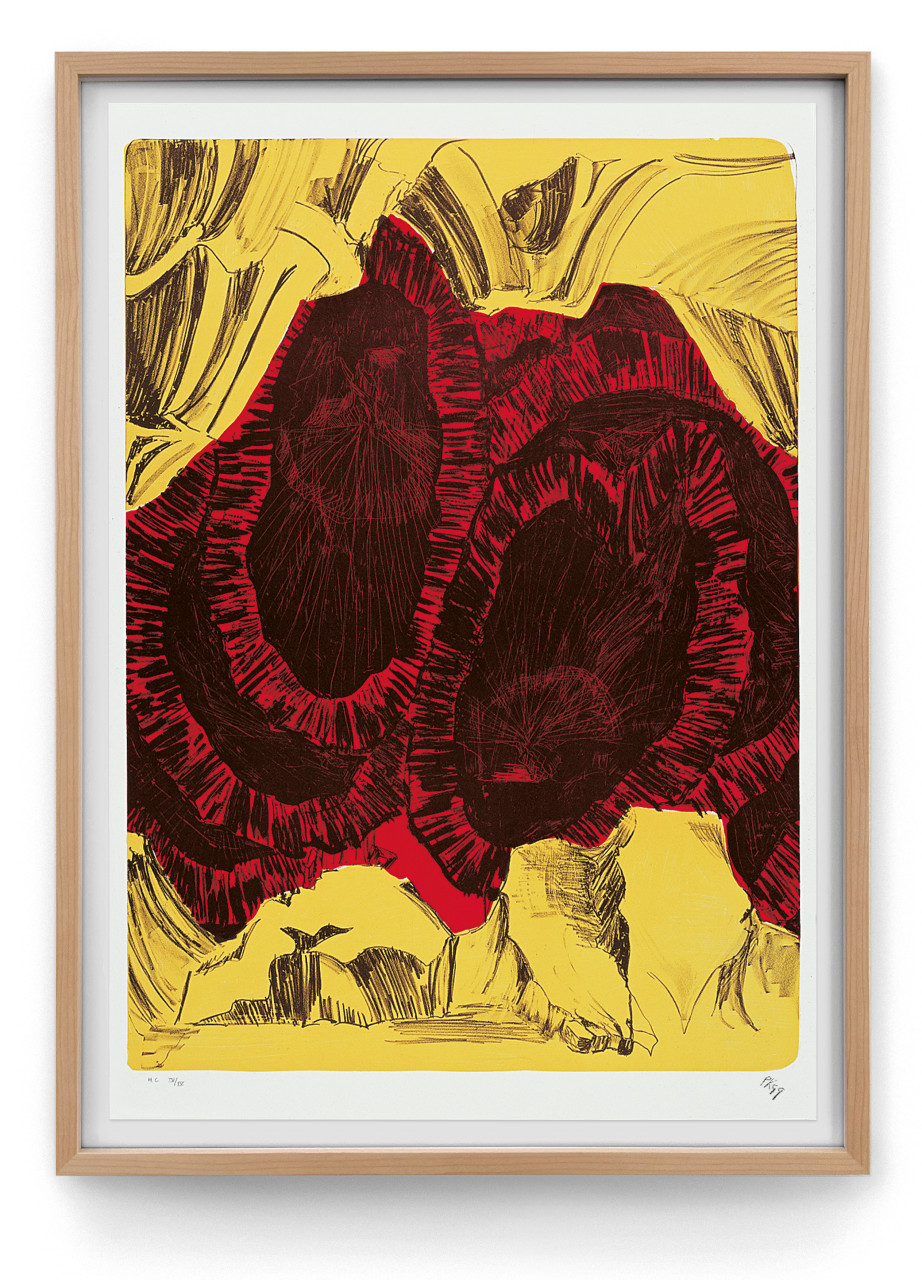
Per Kirkeby
Athos
1999
Lithograph from stone on rag paper, 94.5 x 65.5 cm (37 x 25¾ in). Edition of 99, signed and numbered.
Per Kirkeby’s lithograph Athos (1999) captivates with a central, luminous red framed by fields of yellow. Only upon closer inspection does a complex texture of hatching, smudges, and scratch marks reveal itself. The yellow areas condense into rock-like structures – a nod to Kirkeby’s geological interests. The title of this edition refers to Mount Athos, a spiritual center known for its centuries-old monasteries and caves. Kirkeby plays with ambivalence: the red forms at the center of the image open like mysterious mouths, their meaning remaining elusive. With masterful use of lithography, he merges delicate drawing with painterly depth and vibrant color dynamics.
€ 1,000 € 600 / $700 shipping costs included

Joseph Kosuth
The Criterion Of The Real
2009
From Forty Are Better Than One
Double sided 10-part leporello, embossing/debossing on Gmund Colors 21 paper, 32 x 250 cm (12½ x 98½ in). Edition: 75 + 25 AP, signed and numbered on label on archival sleeve.
Realised as a leporello that folds down to a 32 × 25 cm format for shipping and storage.
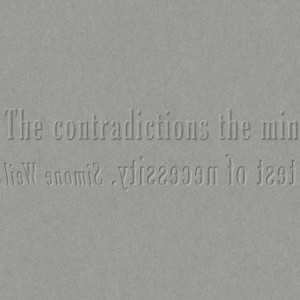
For this edition, Joseph Kosuth chose a quote by French philosopher, mystic and political activist Simone Weil, which states that contradiction is not a flaw in our understanding of reality, but a sign we are engaging with something truly real and necessary. The full, embossed quote reads:
THE CONTRADICTIONS THE MIND COMES UP AGAINST – THESE ARE THE ONLY REALITIES: THEY ARE THE CRITERION OF THE REAL
THERE IS NO CONTRADICTION IN WHAT IS IMAGINARY. CONTRADICTION IS THE TEST OF NECESSITY. SIMONE WEIL
€ 1,000 € 600 / $700 shipping costs included
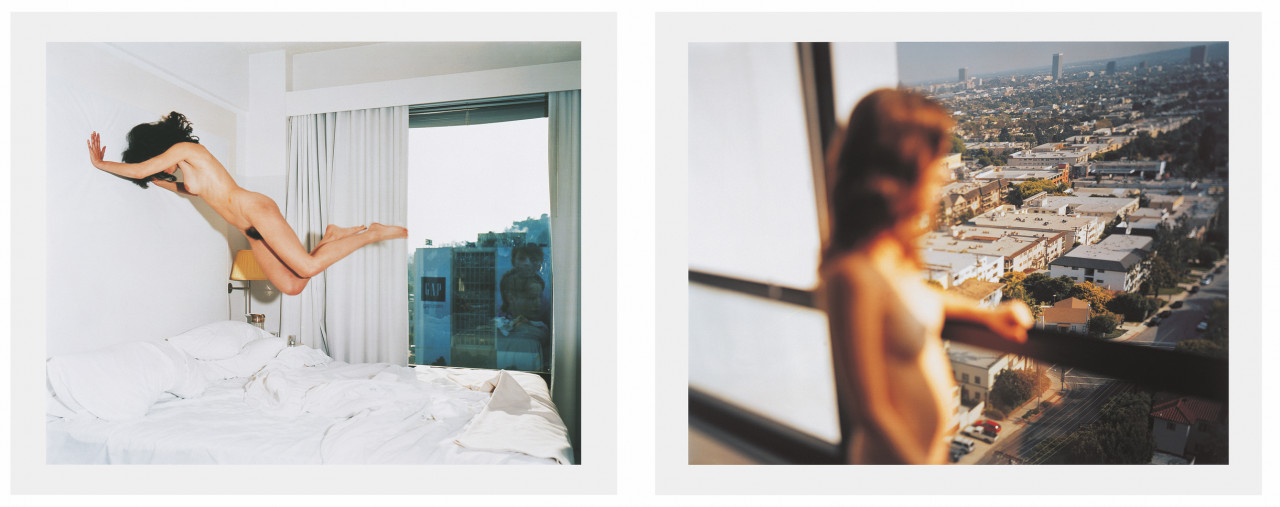
Malerie Marder
Untitled #1 and #2
2001
From Double Exposure
Two digital pigment prints (LightJet), mounted on plexiglas, 50.5 x 60.5 cm (20 x 24 in) each. Edition of 45, signed verso of left image.
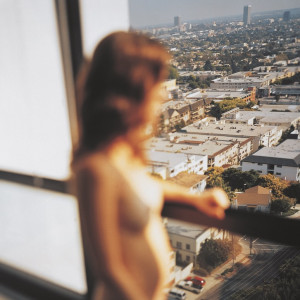
Malerie Marder (born 1971, lives and works in Los Angeles) sets up unconventional nude portraits and scenes using friends, family and herself as models. Inspired by film, her disturbing and enigmatic images have a strong cinematic quality, where tension is created through the uncertainty of the scene and the uncertainty of the relationships. The subjects at times appear to be caught off guard, further enhancing the awkwardness of the image and cleverly orchestrating a sense of uncomfortable voyeurism.
Set € 1,000 € 600 / $700 shipping costs included
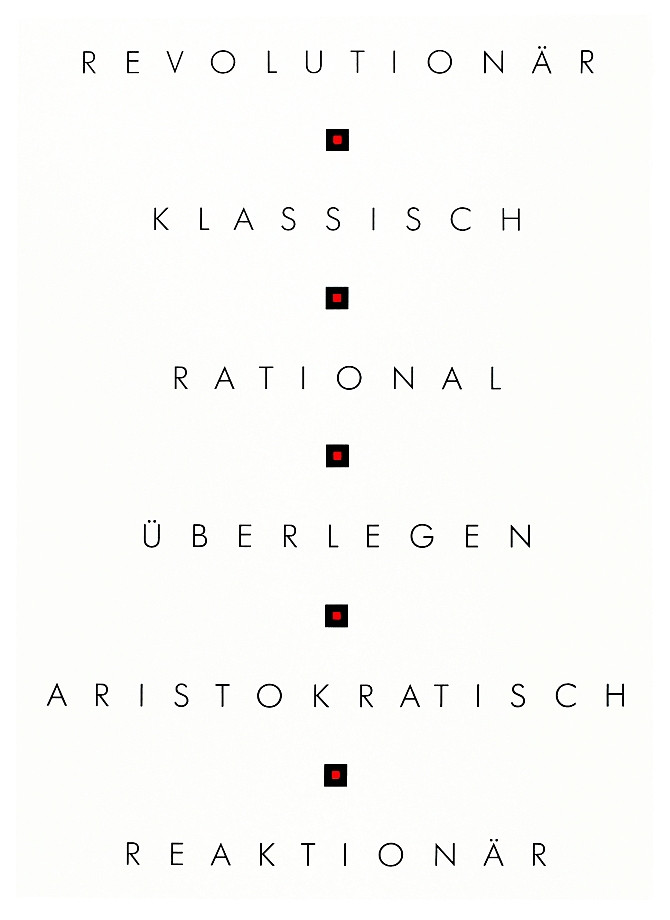
Gerhard Merz
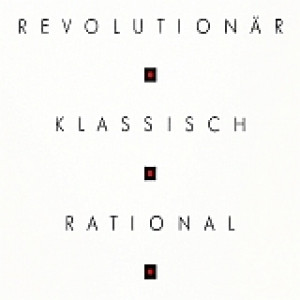
Revolutionär Klassisch Rational ...
1988
Offset on rag paper, 70 x 50 cm (27½ x 19¾ in). Edition of XXV, signed and numbered.
€ 900 € 540 / $600 shipping costs included
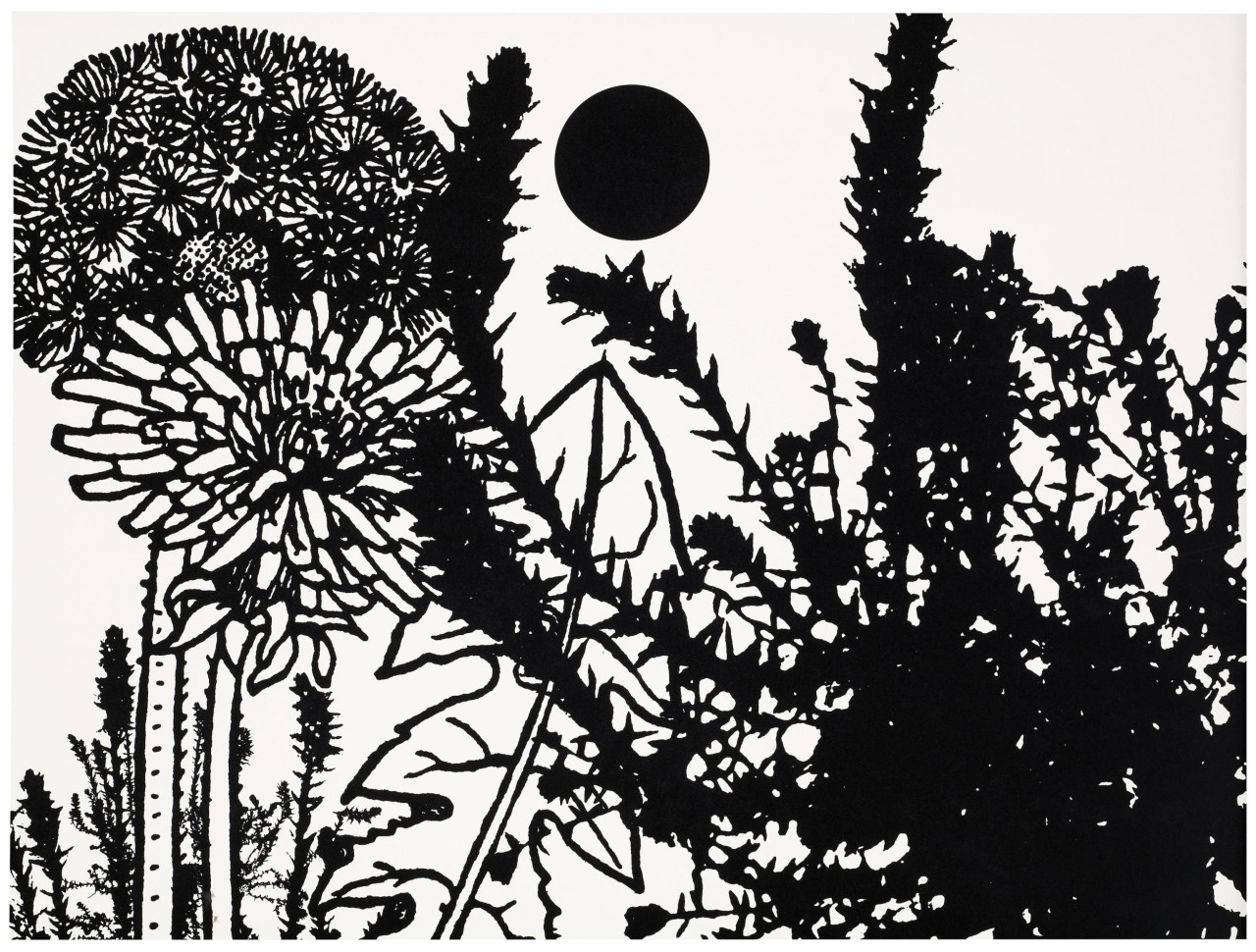
Paul Morrison
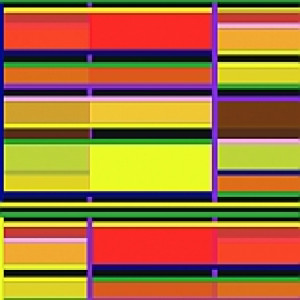
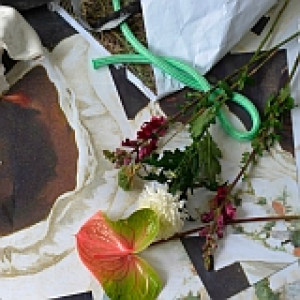
from: Black Dahlias
2004
Screenprint on rag paper, 73.3 x 98.5 cm (28¾ x 38¾ in). Edition of 45, print signed, numbered only on colophon of set.
€ 1,500 € 900 / $980 shipping costs included
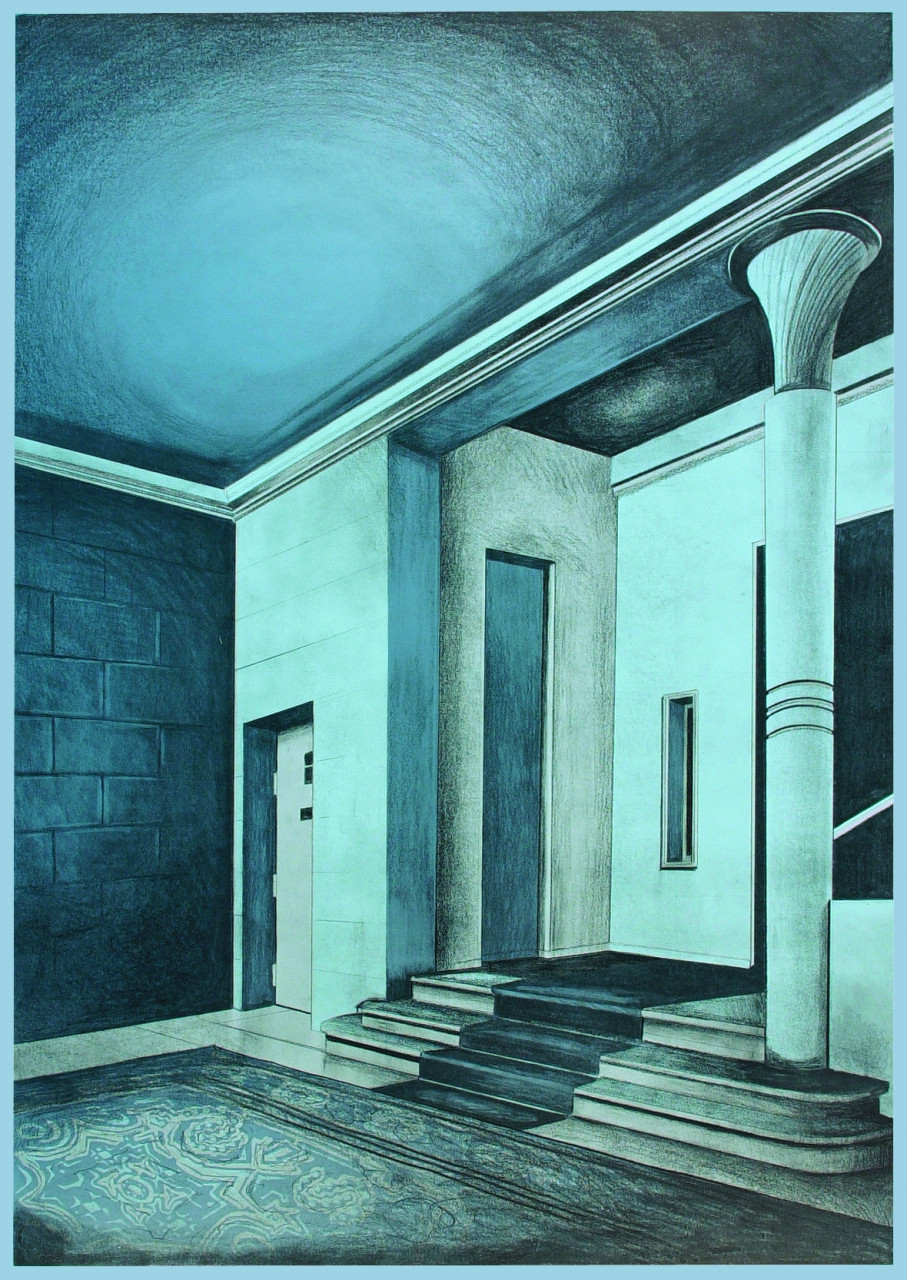
Lowell Nesbitt
Hotel
1971
Color silkscreen on silver-coated cardboard, 95.5 x 67.5 cm (37 x 26½ in). Edition of 100, signed and numbered.
Condition: good overall, but some minor bends at the lower edges, and a dent in upper left part.
special price € 400 / $550 shipping costs included
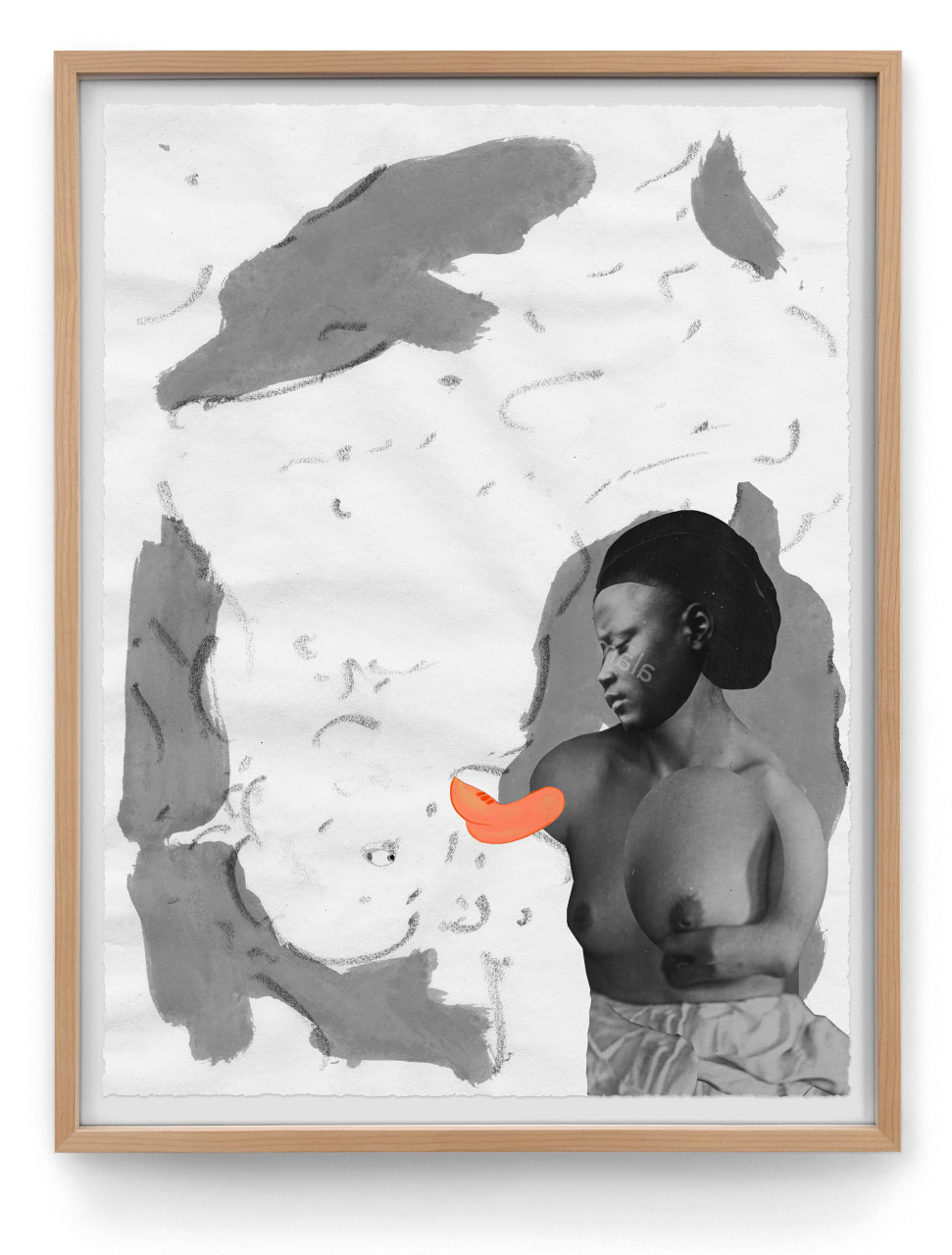
Frida Orupabo
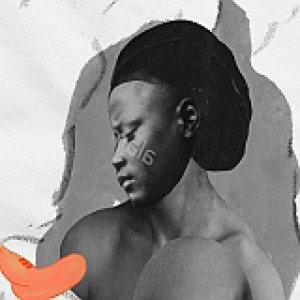
A Visit
2020
From Cadavre Exquis / Manet Olympia
Digital pigment print, on Hahnemühle Photo Rag, hand-torn, 54 x 40 cm (21.25 x 15.75 in). Edition of 20, signed and numbered on label verso.
special price € 600 / $700 shipping costs included
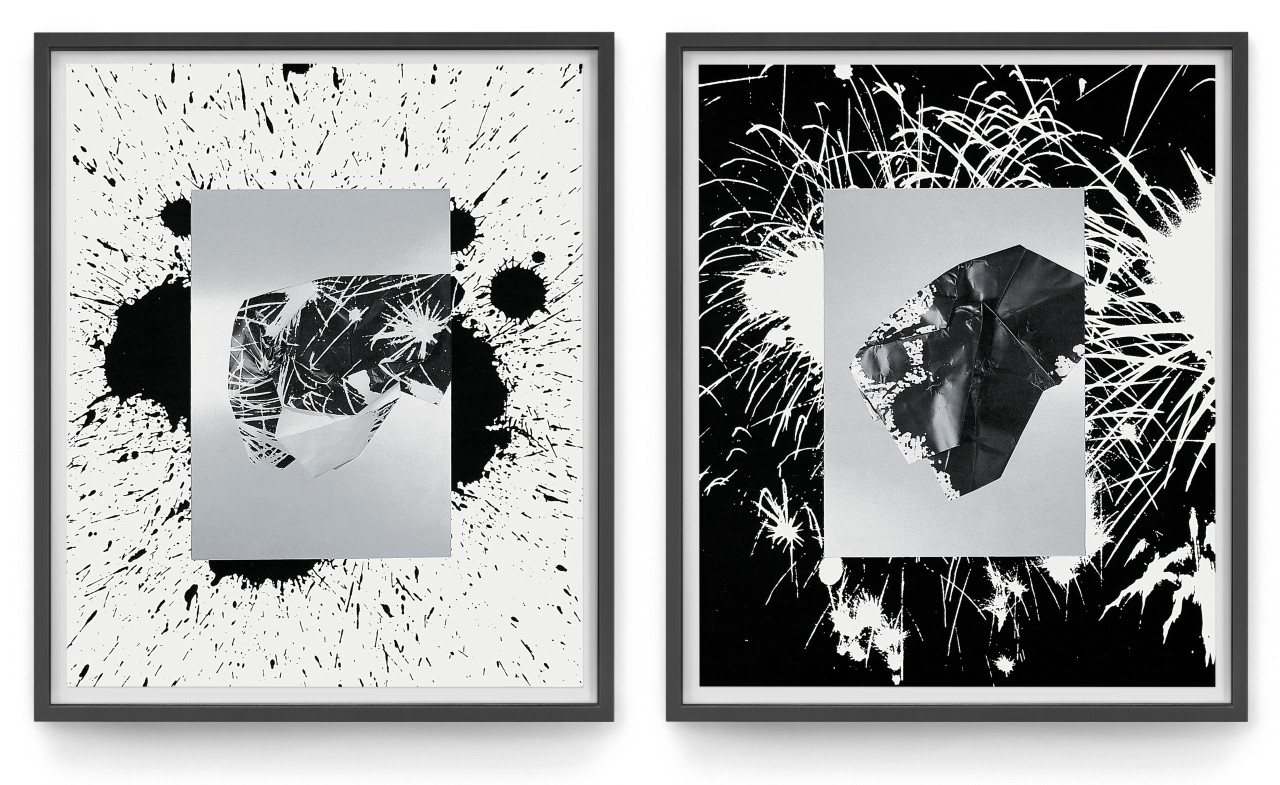
Giulio Paolini
Chiaroscuro
1998
From Sequences
Two silkscreen and offset lithographs on Gohrsmühle rag paper, folded as passe-partouts, printed inside and outside. Each print 50 x 40 cm (19¾ x 15¾ in), each signed and numbered. Edition of 60+X.
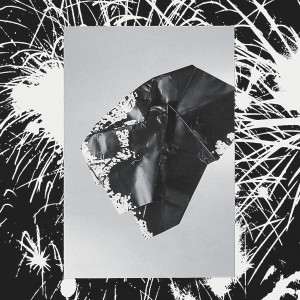
Giulio Paolini on this diptych edition: "All my works revolve around a diaphragm implicit in the image – like an ideal mirror that reflects and reveals the appearance which constitute it. The two prints Chiaroscuro (light-dark) represent two different versions of the same image; a black spot on a white sheet (La Sainte-Vierge by Francis Picabia, 1920) and a white spot on a black sky (fireworks from a photograph by Paolo Mussat Sartor). The first image frames the second and vice versa."
Set € 800 € 480 / $550 shipping costs included
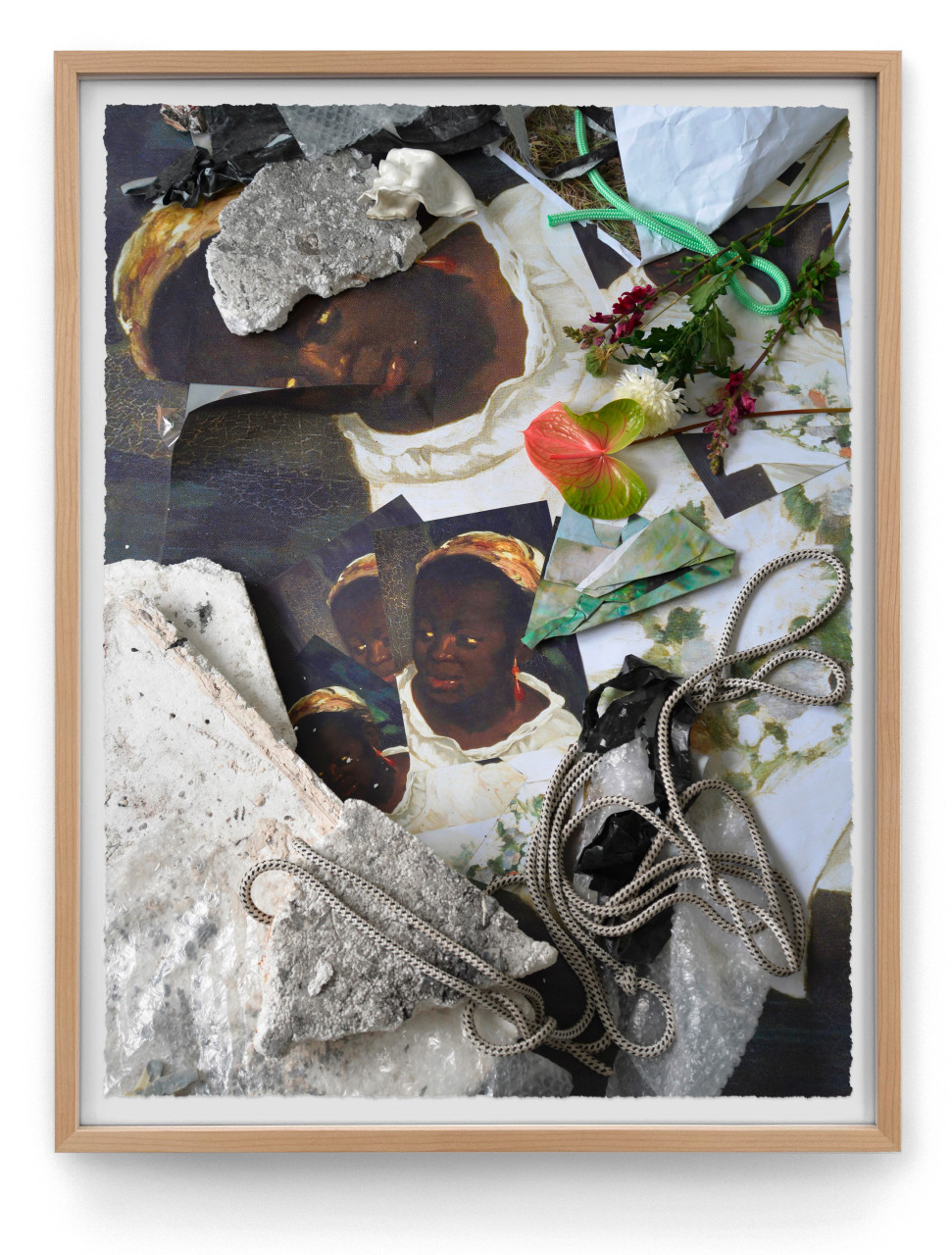
Peles Empire
Laure
2020
From Cadavre Exquis / Manet Olympia
Digital pigment print, on Hahnemühle Photo Rag, hand-torn, 54 x 40 cm (21.25 x 15.75 in). Edition of 20, signed and numbered on label verso.
special price € 600 / $700 shipping costs included
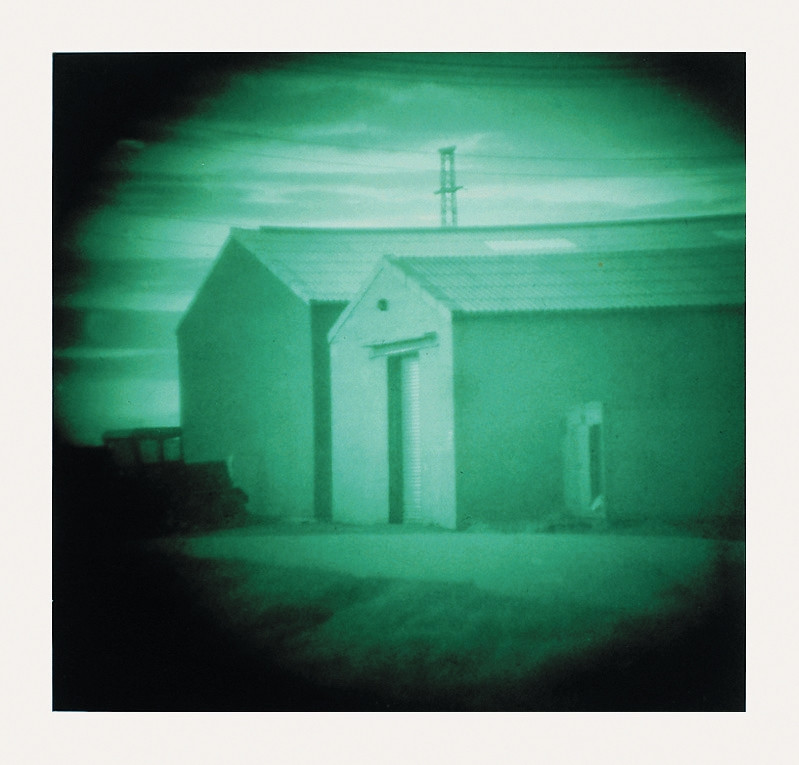
Thomas Ruff
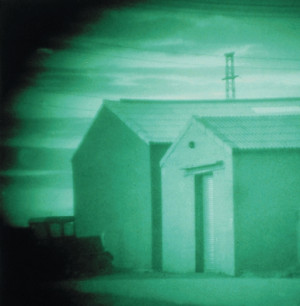
from: Nächte
1993
Grano lithograph, 71 x 74 cm (28 x 29 in), signed and numbered on verso, #36/45.
Condition: hardly visible handling crease.
sold

Luc Tuymans
Harbor / Refribell
2009
From Forty Are Better Than One
8-part leporello, digital pigment print (Ditone) on 188 g Hahnemühle Photo Rag paper, 200 x 32 cm (78¾ x 12½ in). Edition of 75 + 25 AP, signed and numbered on label verso.
Realised as a leporello that folds down to a 32 × 25 cm format, in archival sleeve for shipping and storage.
The eight images in this edition are based on black and white films taken by Luc Tuymans in 1981-82 with a Super 8 camera. Refribell refers to the artist's recordings of several buildings in the harbor of Antwerp that have since been demolished, in particular the enormous cold storage facility of Belgian refrigeration company Refribell. Harbors refers to Tuymans's footage of a ship's bow and a full moon and refers to the collective memory associated with harbors.
€ 1,500 € 900 / $950 shipping costs included

