
Joe Tilson
Joe Tilson (1928-2023), born in London, lived and worked in London and Italy. A leading figure of British Pop Art, he is known for his paintings, prints, reliefs and constructions, particularly his brightly coloured wooden works incorporating letters, numbers and familiar symbols. Drawing on his background as a carpenter, Tilson combined craftsmanship with the visual language of popular culture, often exploring themes of language, symbolism and visual play. From the 1970s onward, his work increasingly turned towards nature, ecology and the cultural traditions of the Mediterranean.
With the approval of Joe Tilson’s studio, we have compiled the most comprehensive survey of the artist’s edition oeuvre to date, documenting more than 380 works in a freely accessible digital resource on Ars Publicata.
Joe Tilson Editions
Joe Tilson
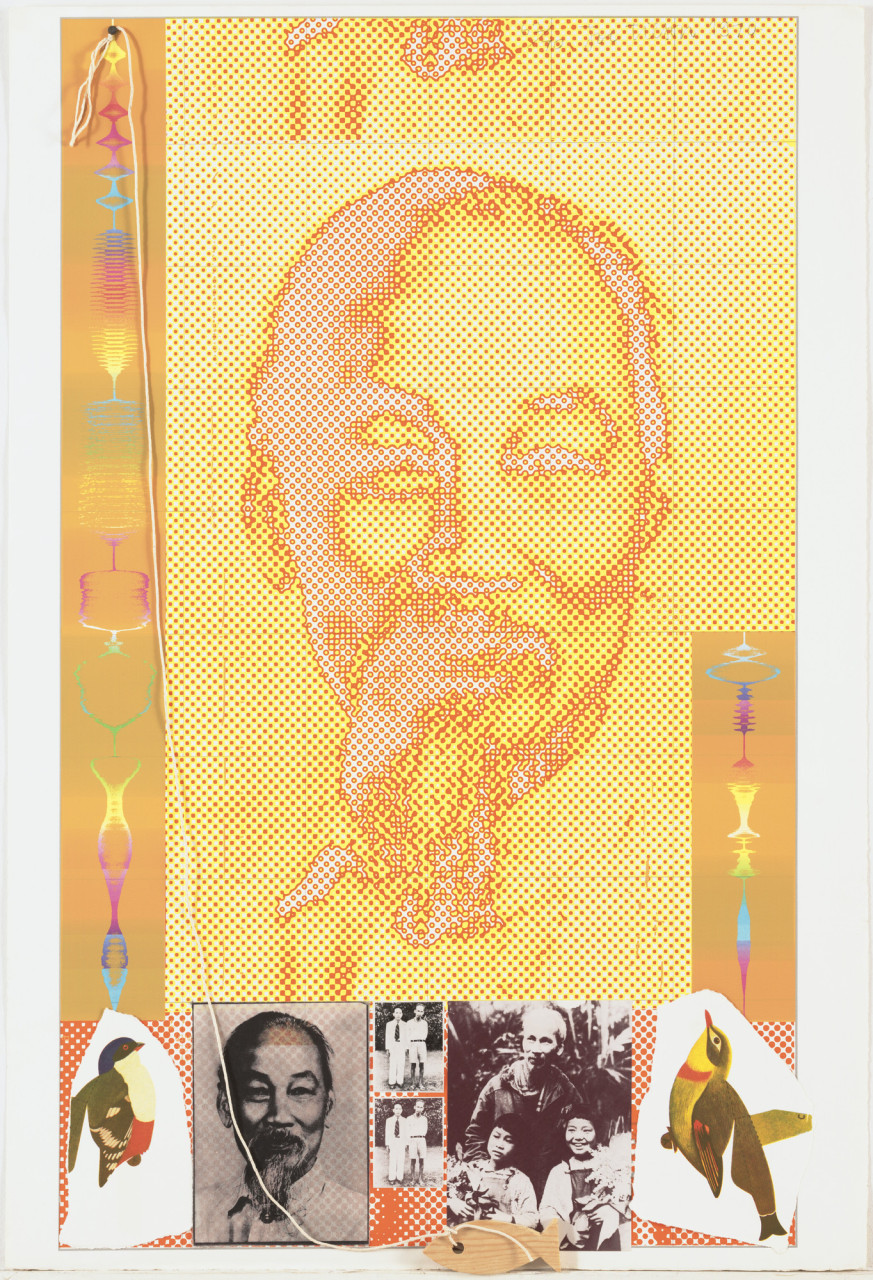
Ho Chi Minh
1970
Color screenprint with collage, twine, wooden fish, 103 x 70.2 cm. Signed A.P. to the edition of 70.
Joe Tilson’s edition Ho Chi Minh (1970) combines a portrait of the Vietnamese revolutionary leader with elements drawn from popular imagery and traditional Vietnamese culture. The densely patterned composition brings together photographic imagery, stylized forms and collage elements, while the attached wooden fish introduces a tactile, sculptural element. The work reflects Tilson’s engagement with political and cultural themes and his characteristic combination of Pop Art imagery with handcrafted materials. Ho Chi Minh is part of the collections of The Museum of Modern Art, New York, and Tate, London.
EUR 3,500
Joe Tilson
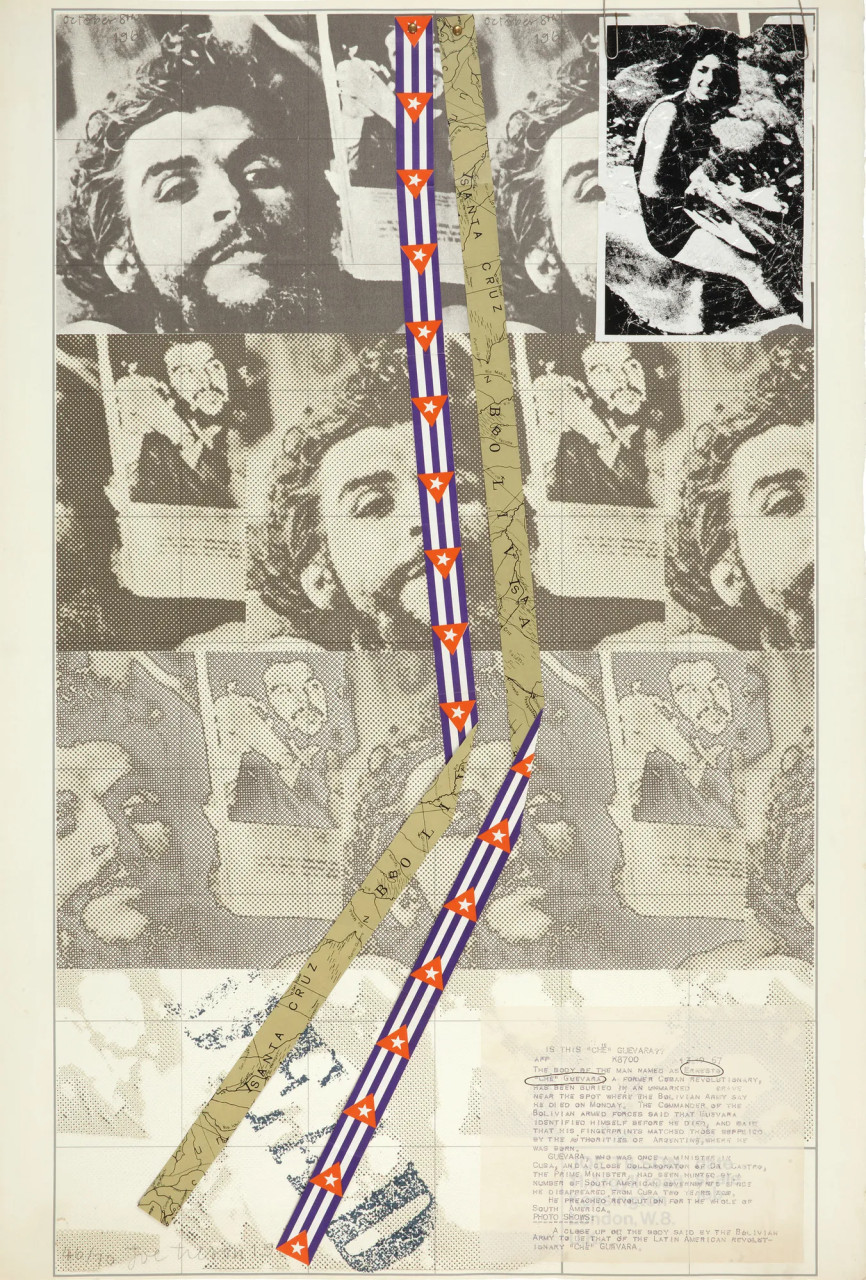
Is this Che Guevara?
1969
Color screenprint with collage additions, including a gelatin silver photograph and metal paper clips, on J Green paper, 101.5 x 68.5 cm. Edition of 70, signed and numbered.
This edition by Joe Tilson questions the identity and media representation of the revolutionary leader following his death in Bolivia in 1967. Repeated photographic images of Guevara are overlaid with fragments of maps, newspaper reports and bold graphic elements, including a striped band of stars and a winding map-like form. The central newspaper text reports on the identification and burial of Guevara’s body, emphasizing the uncertainty surrounding his death and identity.
The work reflects Tilson’s increasingly anti-authoritarian and politically engaged practice of the late 1960s, when figures such as Che Guevara, Ho Chi Minh and Malcolm X became recurring subjects. Guevara’s death without trial and the subsequent concealment of his burial contributed to his transformation into a revolutionary martyr and international symbol of resistance. By combining documentary material with repeated imagery and graphic intervention, Tilson turns contemporary news into a critical reflection on political violence, media representation and the construction of revolutionary icons.
The work is part of the colleciton of MoMA, New York.
EUR 1,800

